You don’t prepare for the drone threat by building just one wall
The rapid evolution of warfare and drones is forcing Finland to think about security in a new way. The sightings of recent times are only the easiest part of the phenomenon: isolated, anomalous and still relatively visible incidents. The real challenge begins if hundreds or thousands of unknown or hostile drones are moving through our airspace at the same time.
It is naive to assume that the drone threat will come from only one direction in the future. Drones can come from the east, from the sea, from inland, or from within authorised traffic. They can also be launched from within Finland’s own borders. To a drone, the national border is just one coordinate among many.
That is why the starting point for preparedness cannot simply be the question of how to defend against a single drone. The more important question is how thousands of observations can be turned into a timely, usable situational picture to support command and decision-making. The number of drones in society will grow regardless: they are used by authorities, businesses, the media, research institutions, agriculture, construction and hobbyists. The future problem is not only identifying hostile drones, but also identifying authorised ones and avoiding needless alarms.
A hyper-adaptive interface and AI as a combined enabler
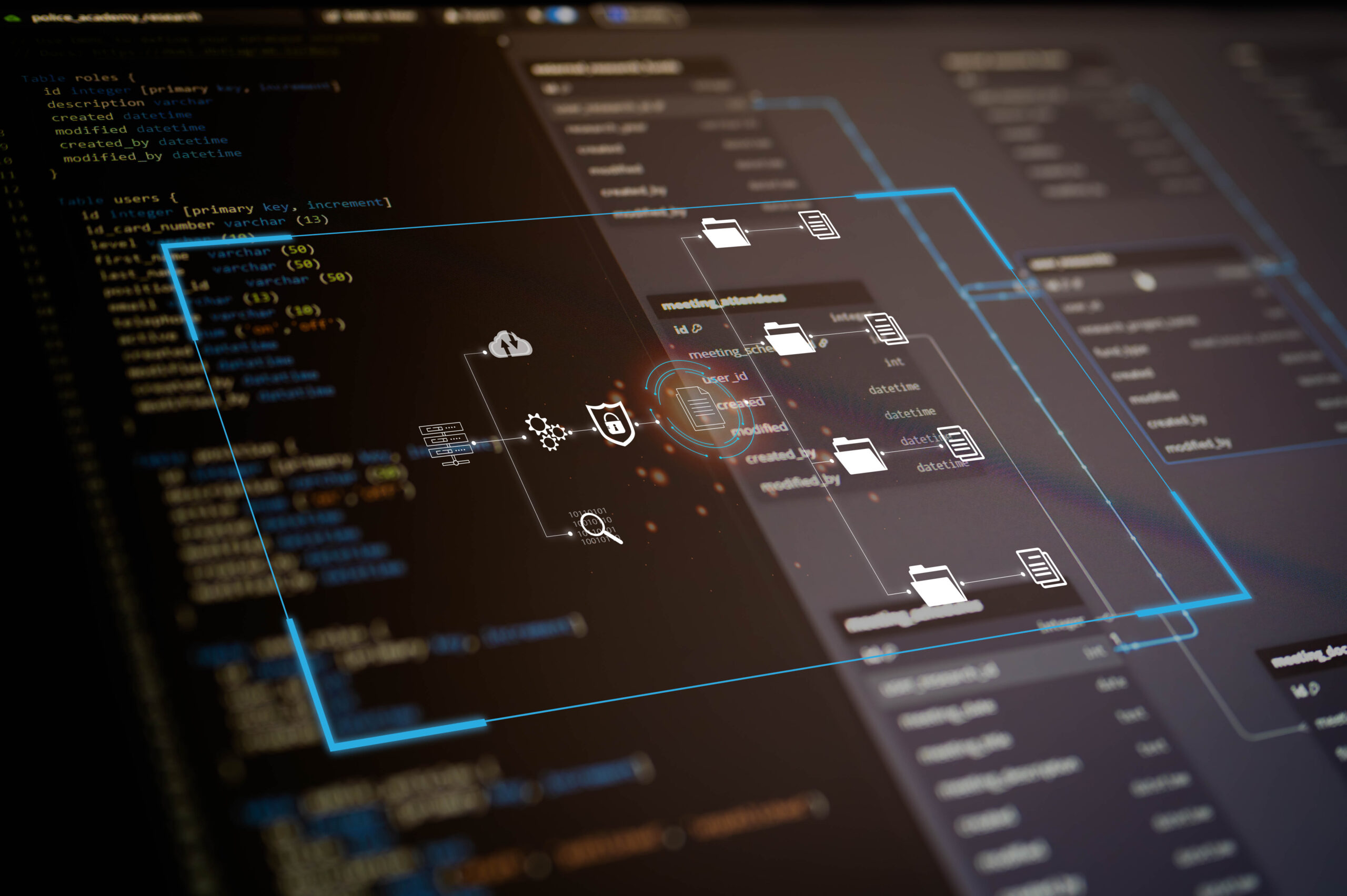
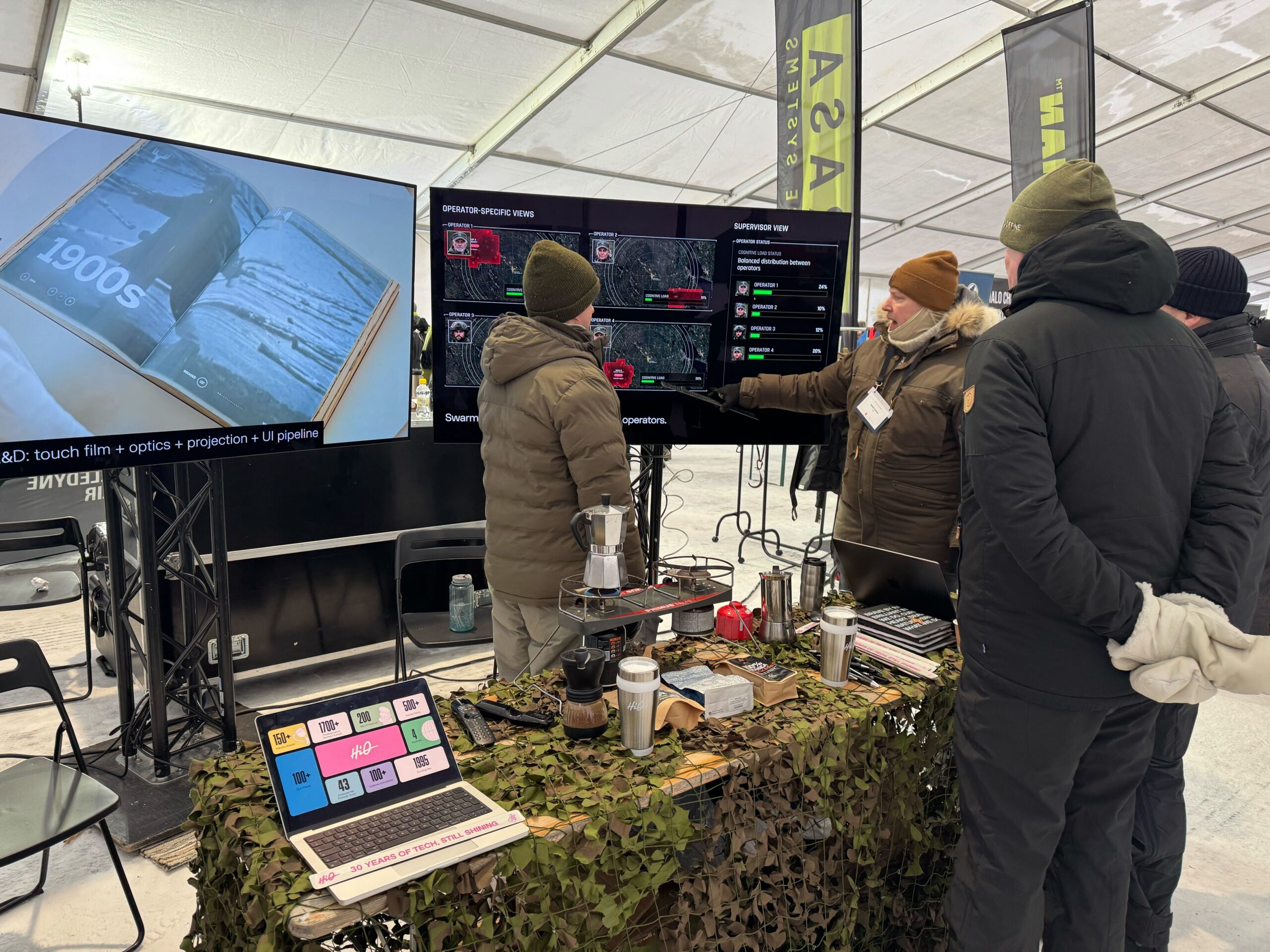
HiQ has been researching hyper-adaptive interfaces for years. The rapid progress of AI has now made the concept genuinely feasible: the interface can adapt to the user’s role, to the situation, and to their capacity to process information. Its job is not to display everything possible, but to surface precisely the information that the decision at hand requires. When the volume of data grows too large, the system has to filter, structure and prioritise it so that human decision-making is not overloaded. This gives the user better conditions to make the right call, even in a fast-changing situation.
As the drone threat develops, it is clear that this model has an important role to play in solving the challenges around it. The challenge is not only the number of observations, but their uncertainty. The system has to be able to combine signals from different sources, assess their reliability, and show the user only the information that helps them make decisions. Which is exactly what a hyper-adaptive interface is designed to do. AI also adds value in collecting, refining and shaping information, while enabling natural interaction through speech.
You can read more about the hyper-adaptive interface here.
A Common Operational Picture and reporting application – DroneWatch
HiQ has built a prototype of a drone situational-picture and reporting application, which we call DroneWatch.
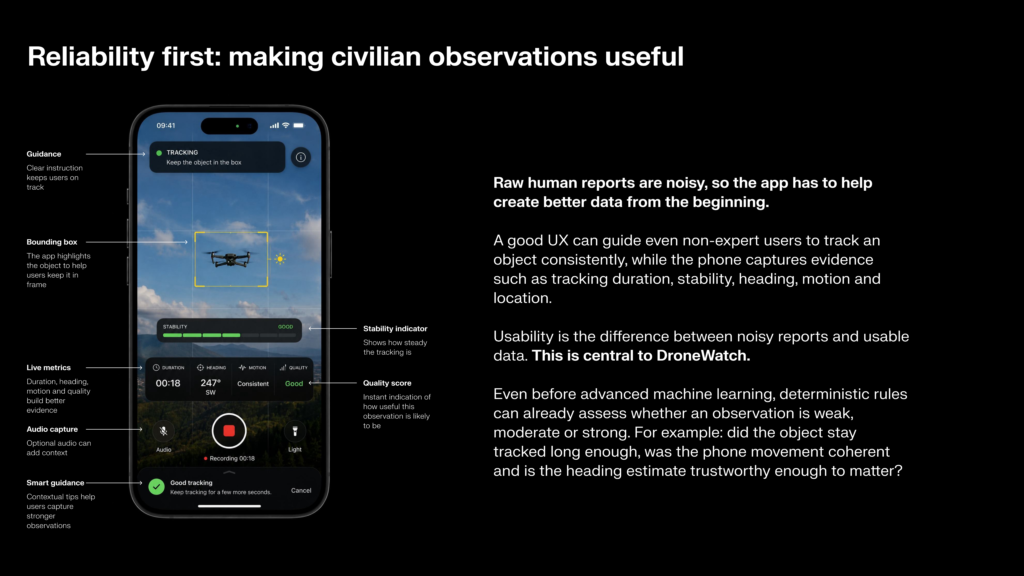
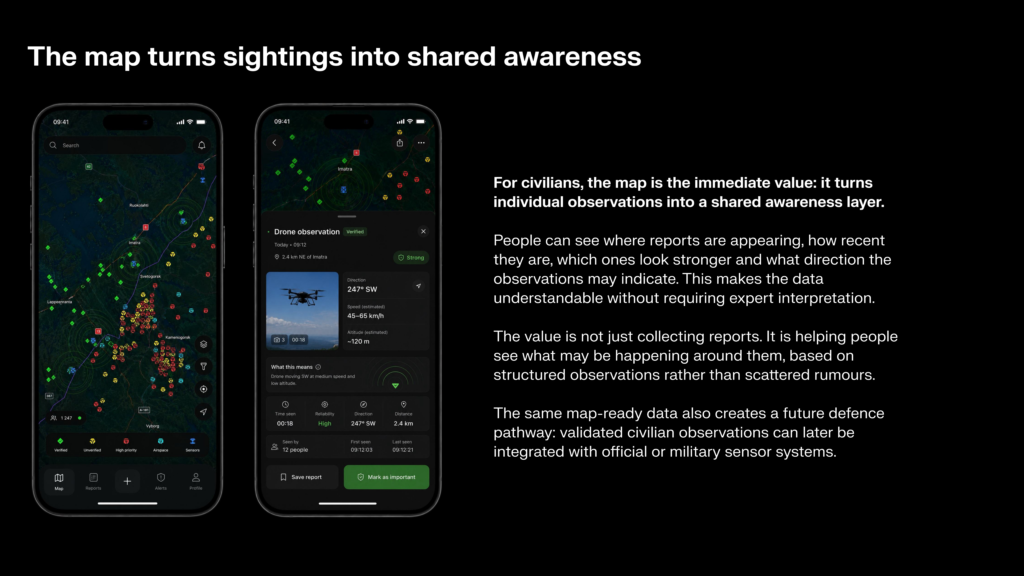
We need a national Common Operational Picture application like DroneWatch. Under normal conditions, the application can distinguish an authorised drone from a suspicious one. To begin with, using it could be voluntary, but as the services and operating models mature, they can be developed into a regulated part of a national service and of the authorities’ situational picture. In emergency conditions, an application like this is extremely valuable to both the authorities and the public.
Citizens have a role here too, but it must be designed correctly. Almost everyone carries a camera, a microphone, GPS, a compass and motion sensors in their pocket. From this, a vast nationwide sensor network spanning millions of devices can be formed: HaaS – Human as a Sensor. A citizen should not be expected to act as an airspace defence operator, but they can be guided to make a safe and useful observation. History shows that citizens can support airspace surveillance and now the same idea needs to be brought into the digital age.
The operating models we have today do not scale. If people try to report thousands of drones to the emergency response centre at the same time, it may seize up at exactly the moment it should be working. That is why we need an observation channel alongside and in support of the emergency response centre. In an emergency, people should still call the emergency number and follow the instructions of the authorities.
Uncertain and large-scale drone sightings should be reportable through an application that guides the user to act safely while still gathering as much information about the sighting as possible. The user can receive targeted situational information about their immediate area, but the authorities’ view is broader and nationwide. This keeps the application from turning into an intelligence channel for an adversary. The right principle is safe transparency: people receive the information they need in order to act correctly, without compromising national defence.
Building expertise, collaboration and the drone professionals of the future
Beyond detection and defence, Finland must develop its own drone expertise. We need collaboration in which educational institutions, authorities, businesses and the Defence Forces can offer learning pathways. Here we should favour open-source solutions, which would make it possible to bring drone expertise as close as possible to all Finns. Open-source solutions, combined with the possibilities of AI-assisted development, give us the best capability to succeed in the future.
In building drone expertise, the goal must not be merely learning to operate the equipment, but wide-ranging experimentation and product-development efforts on which a national drone ecosystem — alongside commercial solutions — could be built. The pace of change is a matter of survival. The battlefield has taught us that without continuous development, today’s solutions no longer work tomorrow.
Summary
You don’t prepare for the drone threat by building a single wall in the sky. You prepare for it by building a layered and shared ability to see, understand and act in time.
Finland must place three things at the heart of its drone preparedness: a shared situational picture, adaptive decision support, and the safely guided participation of citizens. A national observation and situational-picture application like DroneWatch could act as a bridge between them. It would not replace the authorities or the emergency response centre, it would support them.
The next question is not only who builds a solution like this. The question is how authorities, businesses and citizens build it together, so that the same system works in everyday life, in disruptions and in emergency conditions.
HiQ as a defence sector partner
HiQ combines extensive defence sector experience, strong application development expertise, and the ability to deliver user-friendly, high-performance interfaces. Our strength lies in our ability to adopt experimental technology, harness its benefits, and rapidly package it into working solutions tailored to each customer’s needs.
Contact
Region

Get in touch!
Get in touch!
Choose your nearest office, looking forward to hear from you!